Choosing a cremation urn is a personal decision. If you plan to keep ashes at home, share them among family members, place them in a cemetery or columbarium, bury them, or scatter them in a meaningful location, the right container should suit the person you are remembering.
Cremation urns for ashes are available in many shapes, materials, capacities, and styles. Taking the time to understand the options can make the decision manageable during a difficult time.
At Fixed Price Cremations, our cremation service provides a standard receptacle for the cremated remains. Families can also choose from different cremation urns and scattering tubes if they prefer a personalised, decorative, or purpose-specific option.
What Is a Cremation Urn?
A cremation urn is a container to hold cremated remains. It may be intended as a permanent memorial, a temporary container while a family decides what to do later, or a vessel for burial, travel, or scattering.
Some keep a full-size urn in the home as a private memorial. Others select burial urns for cremated remains, use scattering tubes for a farewell ceremony, or divide a small amount of ashes into keepsake urns.
An urn is not always required. Families may choose to retain ashes in the standard container provided after cremation, transfer them into another vessel later, scatter them where permitted, or use a combination of these options.
Types of Cremation Ash Containers
Standard receptacles
A standard receptacle is a container used to return cremated remains to a family after cremation. It is suitable when you need time to decide whether to display, bury, scatter, or share the ashes.
At Fixed Price Cremations, a standard receptacle is included with the service package for families who do not wish to choose an alternative urn immediately.
Full-size urns
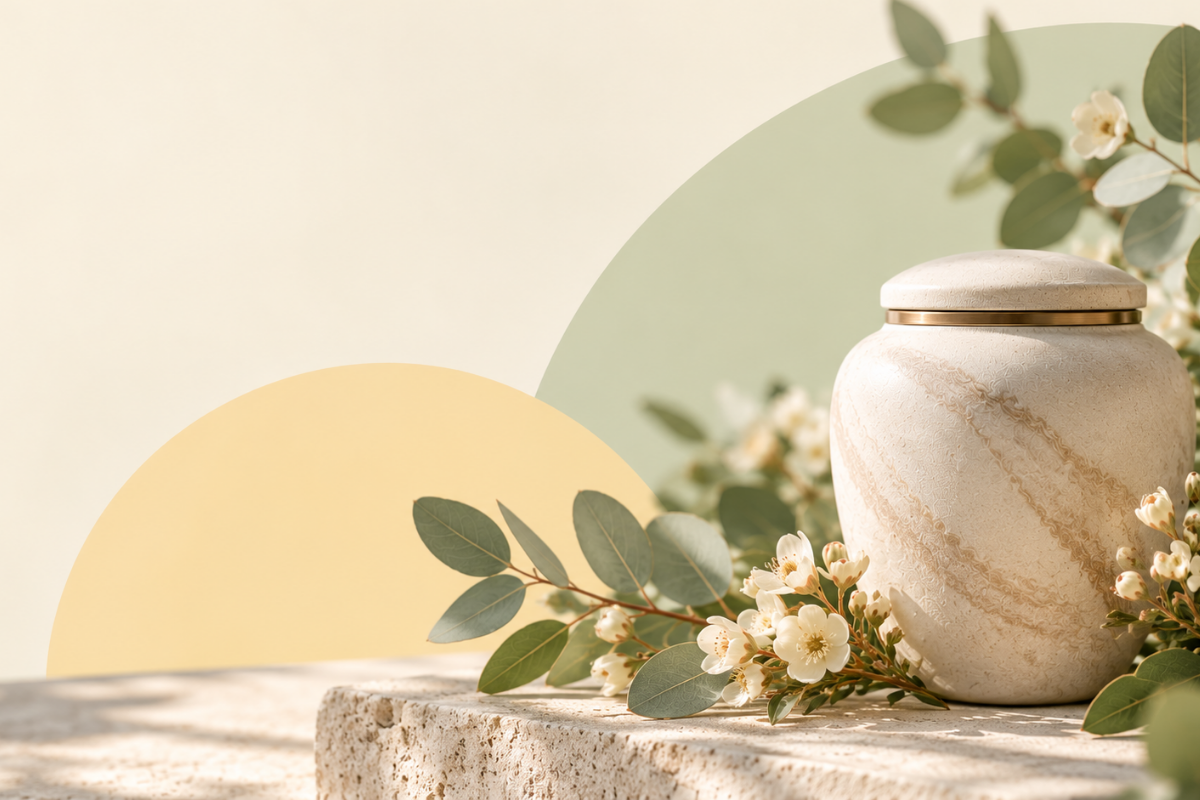
A full-size urn holds all of one person’s cremated remains. These may be made from metal, timber, ceramic, stone, or other durable materials and are selected for display at home, placement in a niche or columbarium, or long-term safekeeping.
A full-size urn may be traditional in appearance, modern and minimalist, or chosen to reflect a loved one’s interests, beliefs, or personality.
Keepsake urns
Keepsake urns are smaller than full-size urns and are intended to hold only a portion of the ashes. They can be a thoughtful choice when close family members live in different places or wish to keep a small, personal memorial.
Keepsakes are available in small decorative urns, hearts, birds, and other meaningful designs. Because their capacity is limited, they are not appropriate for all cremated remains unless several are being used.
Scattering tubes and biodegradable urns
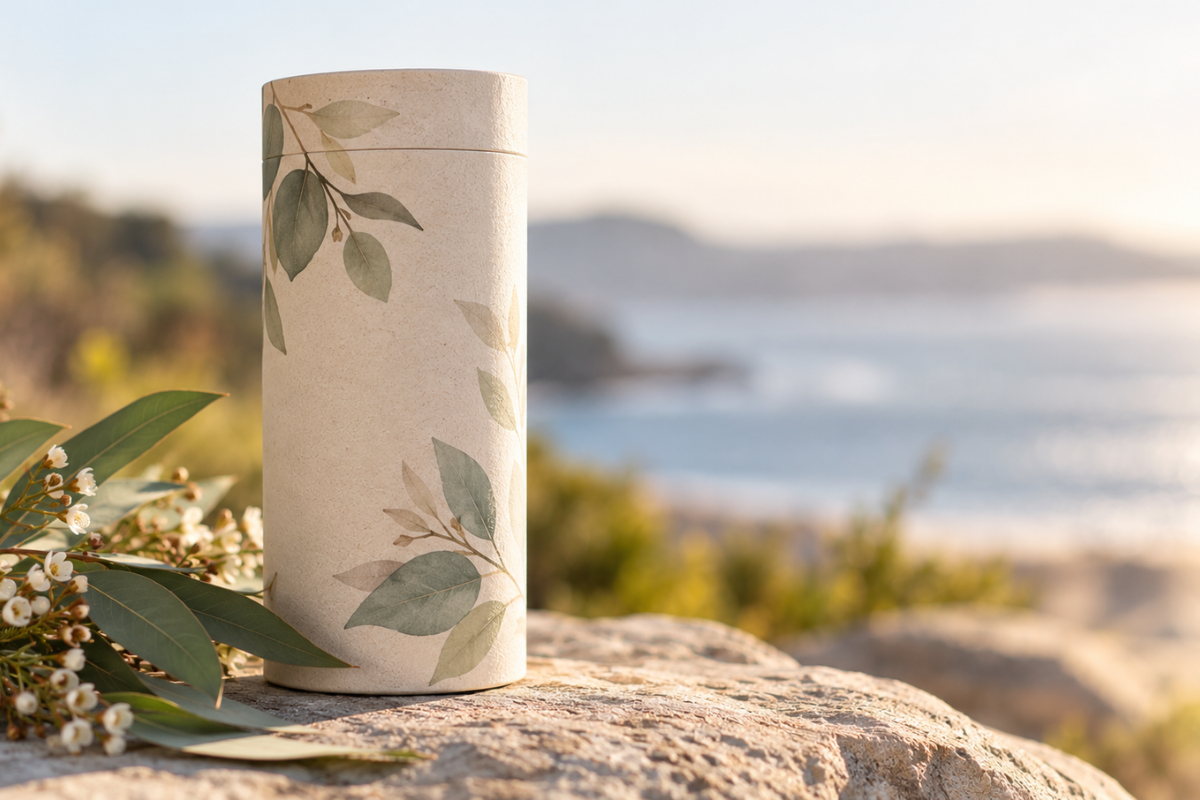
Scattering tubes make transporting and scattering ashes simple and dignified. They are made from biodegradable paper or cardboard and can be useful for a ceremony at the beach, in a garden, or at another meaningful outdoor location.
Biodegradable urns are also chosen for a water farewell or environmentally conscious burial. Before scattering ashes in a public place, check any local council, land manager, or waterway requirements and choose a location that is respectful of others.
Burial urns for cremated remains
If ashes will be interred in a cemetery, memorial garden, or private burial site, choose an urn that is suitable for burial. Burial urns for cremated remains are made from metal, stone, or sealed timber. In some cases, a cemetery or memorial park may have its requirements for urn dimensions, materials, or vaults.
Always check with the cemetery, crematorium, or memorial park before purchasing to ensure the urn meets their rules and is appropriate for the intended location.
Companion urns
Companion urns are for two people, commonly partners or spouses. They may be a single large vessel with separate compartments or a matched pair to sit together.
If you are considering a companion urn, ask the supplier about total capacity, internal compartments, and sealing arrangements before making a decision.
How to Choose the Right Urn
Consider capacity
An urn needs enough internal capacity to hold the cremated remains. Sizing varies according to the person, the cremation process, and the design of the urn, so confirm the urn’s capacity with the supplier or cremation provider.
If the ashes will be divided among several people, decide if you need one full-size urn plus keepsakes, several sharing urns, or a scattering tube.
Choose a suitable material
- Metal, such as brass, is durable and chosen for long-term display or placement in a niche.
- Timber can provide a warm, traditional appearance and suit home displays.
- Ceramic, glass, or stone are visually distinctive but require careful handling.
- Biodegradable materials are intended for scattering or environmentally conscious burial.
- Plastic receptacles are durable temporary containers while a family decides on a long-term option.
Consider where the urn will be kept, if it may be moved or transported, and how much protection it needs from moisture, sunlight, or accidental damage.
Check sealing and closure
Urns have a lid, threaded closure, screw panel, or other fastening method. A secure closure provides reassurance if the urn is transported, stored long-term, placed in a niche, or kept in a household.
If you want a permanently sealed urn, speak with the supplier or funeral provider first. Some designs can be sealed with an appropriate adhesive, while others are intended to remain accessible in case ashes need to be transferred or shared later.
Think about travel
If you need to travel with ashes, choose a secure container. Airline, security, and destination-country requirements vary. Contact the airline before booking and keep any relevant documentation available.
A durable, sealable urn or temporary receptacle may be more suitable for travel. If ashes are being posted or delivered, ask your cremation provider about packaging and delivery arrangements.
Fixed Price Cremations includes delivery of cremated remains anywhere in Australia as part of its cremation package.
Cremation Urn Prices: What Affects the Cost?
The cost of urns for ashes is influenced by the material, size, craftsmanship, design, personalisation, and whether the item is intended as a full-size urn, keepsake, scattering tube, or biodegradable burial option.
For example, a standard receptacle may be included as part of a cremation arrangement, while an alternative urn may cost more due to premium materials, custom finishes, engraving, or integrated memorial features. Fixed Price Cremations offers scattering tubes from $55 to $83, including GST. Keepsake urns from $105 to $143. And large decorative urns at high price points depending on the design and material.
Set a budget, but do not feel pressured to make a decision immediately. Many families choose the included standard receptacle first and select a permanent urn later.
Ways to Personalise an Urn
Personalisation helps turn an urn into a tribute. Depending on the style, you may be able to include:
- Engraving with a name, dates, a short message, or a meaningful quote
- A photograph or photo-frame urn design
- Artwork, colours, or symbols connected to a hobby, faith, career, or favourite place
- A handwritten message or drawing on a scattering tube
- A keepsake compartment for a small note, piece of jewellery, or other memento
- A custom-made design that reflects your loved one’s personality
Caring for a Cremation Urn
Place the urn on a stable surface, keeping it out of direct sunlight and away from moisture, extreme temperatures, and spots where it could be knocked over. Dust it gently with a soft, dry cloth and follow the manufacturer’s care instructions for the specific material.
If you need to move the urn, use both hands and support the base. For fragile ceramic or glass items, consider wrapping the urn in a soft cloth during transport.
Cremation Urns for Ashes FAQs
Do I need to buy an urn after cremation?
No. A standard receptacle is used to return and safely hold the ashes while you decide what you would like to do. You may later choose an urn, scattering tube, burial option, or keepsake item.
What size urn do I need?
Choose an urn based on its capacity and whether it will hold all or part of the ashes. Ask your cremation provider or urn supplier to confirm that the capacity is suitable, especially for a full-size or companion urn.
Can ashes be divided between family members?
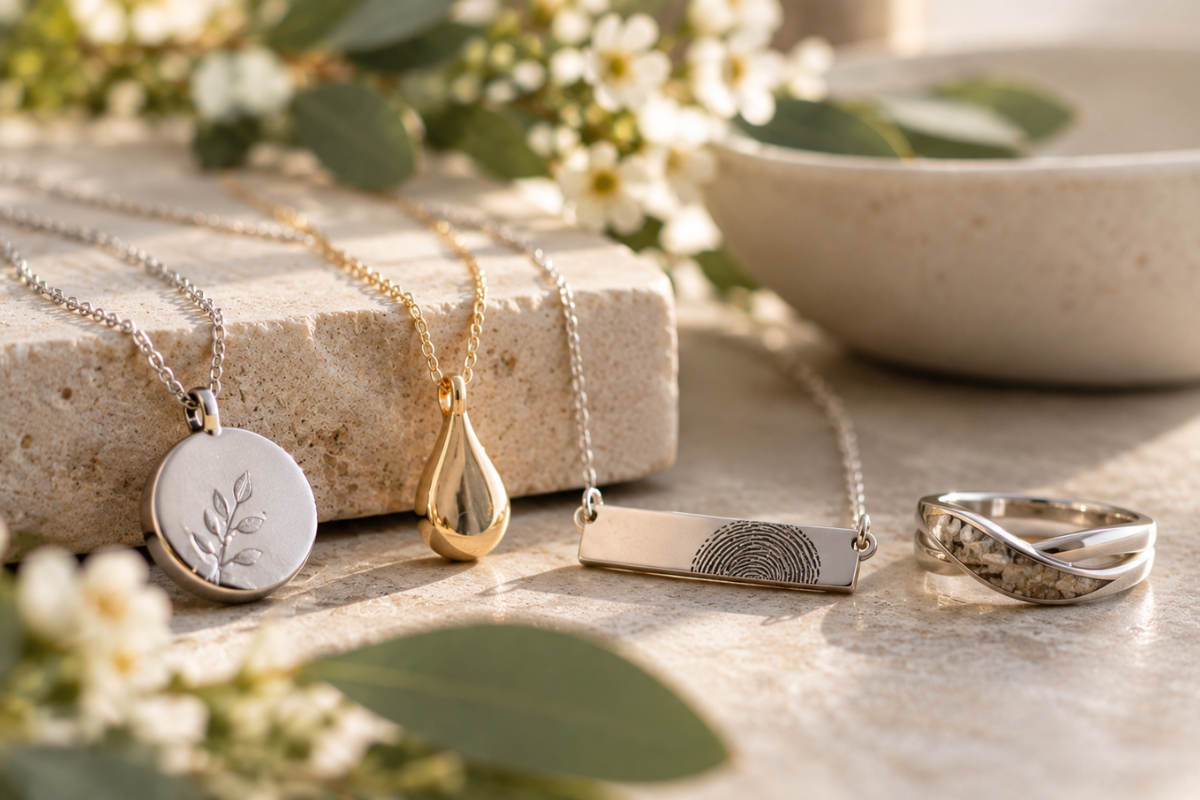
Yes. Many families divide ashes into small keepsake urns, jewellery, or other memorial items. This is meaningful when relatives live in different locations or would each like a personal connection to their loved one.
Can I use an urn for burial?
Yes, but confirm the cemetery or memorial park’s requirements before purchasing. Burial urns for cremated remains should be appropriate for the burial environment and meet any rules about materials, dimensions, or protective containers.
How much do cremation urns cost?
The cost of urns for ashes depends on the type, capacity, material, design, and level of personalisation. A basic receptacle may be included in a cremation package, while keepsake urns, scattering tubes, and premium display urns have different price ranges.
Choosing With Confidence
Choosing an urn does not need to be rushed. Start with where the ashes will be kept, if they will be shared, buried, scattered or transported, and if you need a temporary or permanent container. From there, you can choose a material and style that honours your loved one.
To understand what is included in the service and explore available options, view our cremation packages, browse our cremation urns and scattering tubes, or contact Fixed Price Cremations for compassionate guidance.